

 The unparalleled glory of prasād is most beautifully revealed in the sacred tradition of Jagannātha Purī, where the Lord manifests as Lord Jagannātha. Here, prasād is not merely offered and distributed—it is revered as Mahāprasād, mercy in its most complete and potent form.
According to ancient temple tradition, there is a profound reason why Jagannātha Mahāprasād is first offered to Goddess Pārvatī, worshipped in Purī as Bimala (Vimala) Devi, before it is distributed to devotees.
The tradition traces back to a divine pastime involving Nārada Muni, the eternal sage. Once, Nārada received a small portion of Lord Viṣṇu’s prasād in Vaikuṇṭha. Even a single grain filled him with overwhelming spiritual bliss. When Nārada later shared this prasād with Lord Śiva, Śiva was so transformed by its potency that he began dancing in divine ecstasy.
Witnessing this extraordinary transformation, Goddess Pārvatī wondered what could possess such power. Upon hearing about the glory of the Lord’s prasād, she felt a deep longing to receive that mercy herself—not as a goddess of exalted position, but as a devotee yearning for divine grace.
Moved by her sincerity, Lord Viṣṇu gave a sacred assurance. He declared that when He would manifest as Lord Jagannātha at Nilācala (Purī), His prasād would first be offered to Pārvatī in her form as Bimala Devi. Only after her acceptance would it become Mahāprasād, fit to be shared with all living beings, without distinction.
Even today, this divine arrangement continues unchanged. After food is offered to Lord Jagannātha, it is ceremonially taken to the shrine of Bimala Devi within the temple complex. Only after this offering does it attain the status of Mahāprasād—so sacred that it transcends all material considerations of caste, status, purity, or qualification.
This sacred tradition teaches a timeless truth affirmed throughout the scriptures: prasād is mercy received through humility. The Vedic scriptures glorify prasād as purifying, spiritually transformative, and deeply compassionate. Food offered to the Supreme Lord no longer remains material—it becomes infused with divine grace. Even when honored unknowingly, prasād benefits the soul, gradually softening the heart and awakening devotion.
Prasād does not demand learning, austerity, or prior qualification. It simply offers mercy.
While ordinary food sustains the body, prasād nourishes the soul. Every living being carries an inner hunger—for peace, connection, and meaning. Because prasād is offered to Kṛṣṇa with love, it carries spiritual potency that purifies consciousness and revives remembrance of our eternal relationship with Him.
Many experience that even a simple plate of prasād brings calmness, joy, and inner satisfaction. This transformation often occurs quietly, without intellectual effort or philosophical understanding. In this way, prasād stands as one of the most compassionate expressions of bhakti—accessible to all, gentle in its action, and profound in its effect.
Mahāprasād thus places everyone—king or pauper, learned or simple—on equal spiritual ground, reminding us that the Lord’s mercy is available to all who accept it with humility.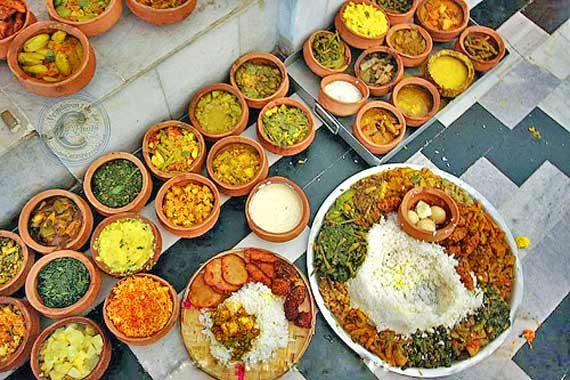
A. C. Bhaktivedanta Swami Prabhupada spoke about prasād with remarkable clarity and compassion. He taught that when food is prepared with care and offered to Kṛṣṇa with devotion, it becomes prasād—Kṛṣṇa’s mercy—and honoring it is itself an act of devotion.
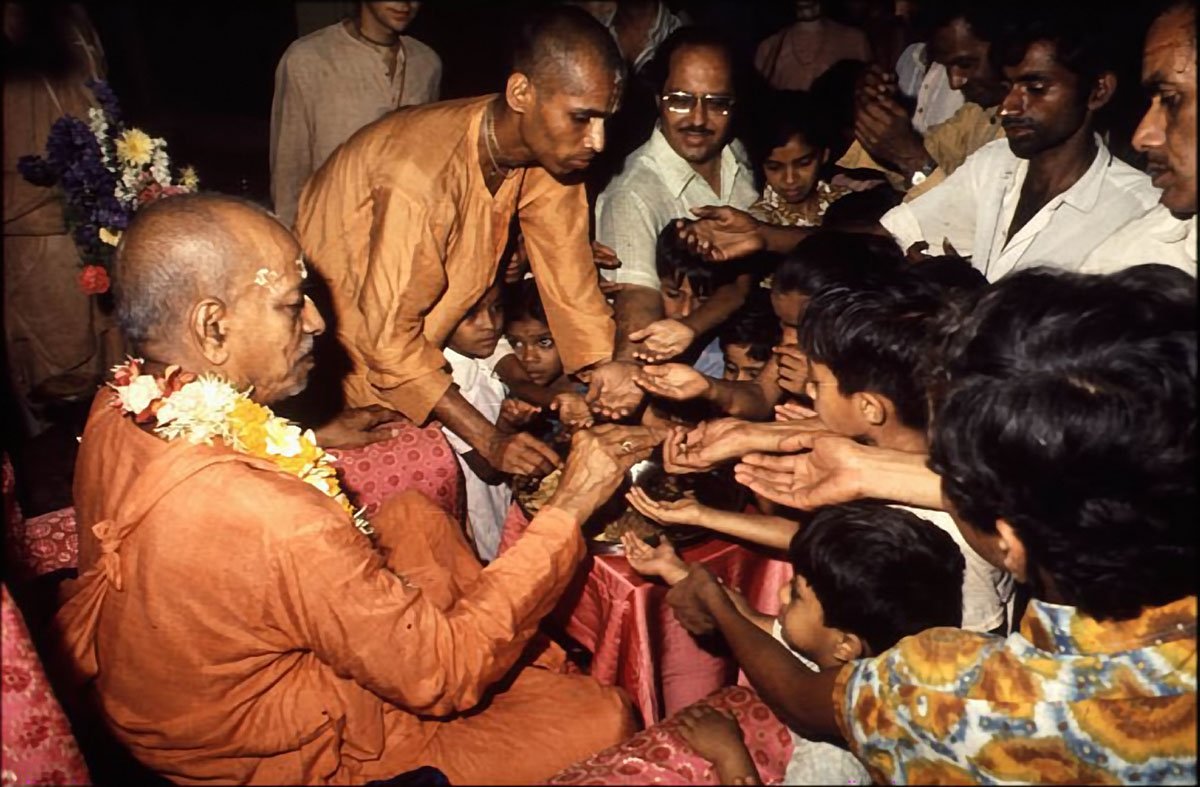
For Prabhupāda, prasād distribution was never secondary. It was a sacred responsibility. He repeatedly emphasized that no guest should ever leave without receiving prasād, and that excuses such as lack of preparation or supply reflected a lack of faith in Kṛṣṇa.
Prabhupāda reminded devotees that everything comes from Kṛṣṇa, and therefore scarcity is an illusion. Kṛṣṇa is not poor, and His mercy is unlimited. With complete trust in the Lord’s arrangement, he encouraged devotees to serve generously, without fear or calculation.
He understood that prasād often reaches people more deeply than philosophy. Simply by honoring prasād, one can begin a spiritual journey. This conviction led him to confidently declare that the whole world could be fed.
His desire was simple and universal: if anyone comes, let them take prasād, chant Hare Kṛṣṇa, and be happy.
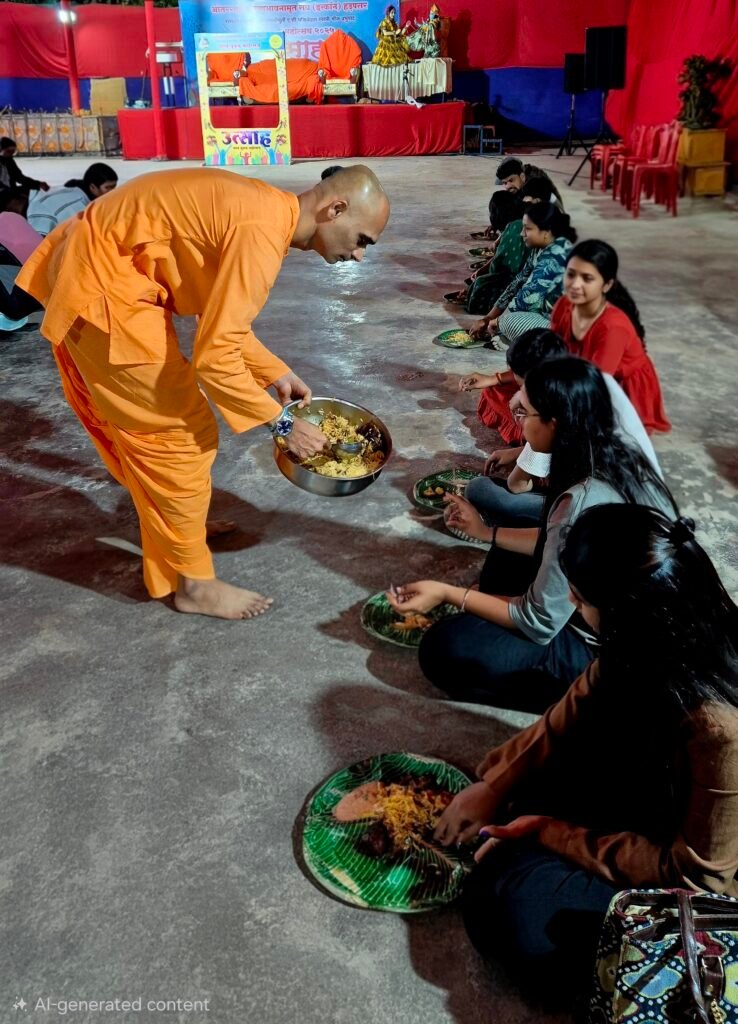 Inspired by Śrīla Prabhupāda’s vision, ISKCON Hadapsar has embraced prasād distribution as a core service. Every day, devotees distribute prasād to nearly 1,000 people, ensuring that no one who comes is turned away hungry.
The offerings may be simple—khichdi, sabji-rice, puri-sabji, halwa—but they are prepared with care, offered with devotion, and served with warmth. Prasād is shared during daily visits, programs, kīrtans, gatherings, and whenever someone arrives at the center.
Even as a growing center with limited resources, the guiding principle remains firm: prasād should never be denied. This service is carried out not with fear, but with faith in Kṛṣṇa’s mercy.
As the center grows, the aspiration is to expand this service further—reaching more families, students, and seekers—always guided by Śrīla Prabhupāda’s desire.